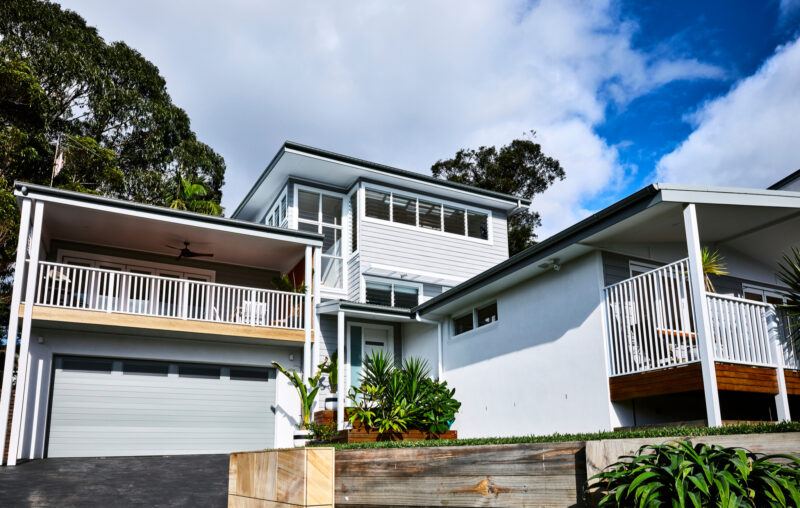
In the United States, zoning laws are overwhelmingly local concerns, though heavily influenced by federal pressures like lending and highway construction. So it’s somewhat novel that the California legislature has passed a series of seven (and counting) statewide bills explicitly to allow the construction of auxiliary dwelling units (ADUs), dismantling a brick wall of state and local restrictions.
Bureaucratically named “Auxillary Dwelling Units” are creative housing arrangements familiar nationwide, encompassing the basement apartment, granny flat, in-law suite, carriage house, and the rentable room above the garage, among others. In the tradition of middle-income families taking on boarders, property owners happily share their spaces in exchange for help paying the mortgage. Renters get good prices (usually paying less than in a commercial apartment building) and live in an area which might otherwise be out of reach. For young people starting out, those starting over, and older people downsizing, these shared residential situations offer significant benefits.
For 100 years it was functionally illegal to build a seperate, rentable space on your own property in California. In the moralistic zoning frenzy of the past century, California led the way on restricting land use, favoring single-family lots of minimum acreage, and forbidding the construction of higher-density, usually more affordable, housing. In a recent reversal, a 2016 California Assembly bill explicitly authorized new ADUs, and required local governments to issue building permits accordingly.
Since then, Californians have voluntarily built at least 35,000 additional housing units and received permits for 20,000 more. In a state where 80 percent of new housing is classified as “above moderate income,” ADUs seem to be going in exactly the opposite direction. A government-led affordability analysis found 66 percent of newly constructed units were affordable to low-income renters.
Unshackling this army of homeowner micro-developers has made more of a dent in California’s profound housing crisis than decades of political handwringing and lavish public spending. The California Comeback Plan included $22 billion to address housing and homelessness. While campaigning in 2017, Governor Newsom pledged that the state’s builders would construct 500,000 units per year — six times as many as they actually have. Once elected, he signed and extended a Housing Crisis Act, attaching significant budgets he called a “bold investment.” The state set ambitious new construction quotas for its cities: just 2 percent (13 cities out of 538) met those goals in 2017.
Among all states, California has the highest rate of poverty and the second-lowest rate of home ownership, and no wonder! Median home prices top half a million dollars, not just in desirable coastal areas, but state-wide. Even with one of the nation’s highest median household incomes, Californians can’t buy homes. At the other end of the scale, the state’s homeless population exceeds the population of Alexandria, Virginia.
Those prohibitively high prices result from, among other factors, high demand among a growing population. Researchers at the The Public Policy Institute of California determined “the state added 3.2 times more people than housing units over the last 10 years [2011-2021]. There are now 2.93 Californians for every occupied housing unit, behind only Utah (3.09) and Hawaii (2.93), and far above the average of all other states (2.53).”
In explaining the deficit of housing units to meet that demand, the PPIC report cites a 2015 legislative analysis that attempted to specify the rate of homebuilding necessary to accommodate a growing population. According to that report, California needed to add between 70,000 and 110,000 homes per year. Over several decades of sluggish building, the deficit grew, leaving Californians bereft of, conservatively, 5 million homes.
With that kind of demand, California developers and builders should be joyfully constructing home after home, sure to be snapped up by boxed-out buyers. Yet real construction data shows new housing starts fell from 2000-2020, despite record-low vacancy rates indicating the market was ready for more.
Why the paltry supply? Highly skewed approval processes allowed California cities to all-but-ban the construction of more housing units and choke off any higher-density, multi-family housing. With plausible-sounding intentions to protect property values, moderate public transportation demand, ensure adequate parking, or preserve green spaces, city planners deliberately depressed the housing supply, inflating the price of existing units and preventing new units from coming to market.
Even when projects get approved, non-construction costs can be prohibitive. Auditors surveyed seven California companies building state-promoted “affordable housing projects” and discovered each dedicated low-income apartment cost over one million dollars to build. Private building stagnated under ever-increasing overhead. The stranglehold of government permitting, environmental regulation, and bureaucratic approvals has made affordable housing a contradiction in terms.
Except, apparently, for California homeowners. When the bans on duplexes and ADUs were lifted, thousands of people spent their own money to build additional units. That latent supply had been present all along. In California’s strapped housing market, thousands of people wanted to build and rent homes and simply hadn’t been allowed. The century-old fetishization of single-family homes on orderly lots had badly distorted the housing supply, and Californians both want housing and want to build housing. All the government had to do was get out of the way.
Laura Williams

Laura Williams is a communication strategist, writer, and educator based in Atlanta, GA.
She is a passionate advocate for critical thinking, individual liberties, and the Oxford Comma.