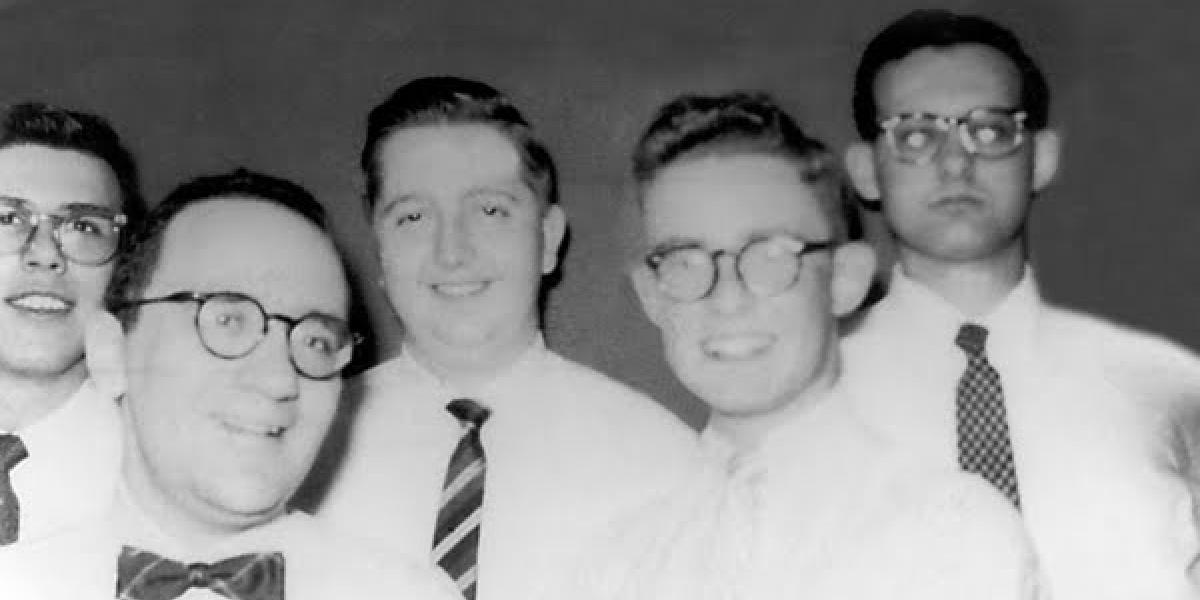
Walter Grinder, a grand champion of liberty, passed last December. While not well-published, Walter was a scholar of the literature of liberty and a leader at the Institute for Humane Studies. He was dedicated to removing barriers to human flourishing by imparting the ideals of liberty. John Hagel III, Walter’s long-time friend and collaborator, explained, “Walter was consumed by the desire to share his reading and thoughts with his network of libertarian associates and protégés in more personal ways, so that they could see more clearly how it connected with their specific work and interests.” Walter shared insights from his scholarship in the form of emails addressed to single individuals and blind copied to his network.
In one of his emails, sent towards the end of his life, Walter wrote he had been “binging” the work of the Turkish-British author Elif Shafak. Walter marveled at “how well she sees into the human condition.”
Walter understood insights into the human condition are crucial to understanding the mindsets that foster or hinder human flourishing. On his recommendation, I read Shafak’s well-researched novel of the Cyprus Civil War, The Island of the Missing Trees. Using the device of a Greek-Turkish couple split apart by the war, Shafak imparts poetic wisdom about the dangers of tribalism.
Shafak’s novel relates the lush island’s descent into tribal hatred as the people made more and more primitive choices. Greek and Turkish tribal fanatics worked without mercy to instill tribal identities, even turning warmhearted neighbors against each other.
Tribalists would rather be a slave to their tribal identity than a member of a flourishing society. In his book Open: The Story of Human Progress, Johan Norberg quoted Peruvian novelist and essayist Mario Vargas Llosa:
The ‘call of the tribe’ – of that form of existence in which individuals enslave themselves […] is heard time after time by nations and peoples and, even within open societies, by individuals and collectivities that struggle tirelessly to negate the culture of freedom.” Authoritarian mindsets don’t end with tribal matters.
Norberg added,
My firm conviction is that it is precisely because we are so tribalist that we need an open, cosmopolitan world. If we did not regularly meet and communicate and exchange with individuals from other groups, they would forever remain the mysterious, dangerous outgroup, the barbarians at the gates.
In The Road to Serfdom, Friedrich Hayek pointed out “the primitive man… was bound by an elaborate ritual in almost every one of his daily activities… was limited by innumerable taboos and… could scarcely conceive of doing things different from his fellows.” The growth of civilization, and thus human flourishing, depends on transcending such primitive limits.
Before tribal conflict erupted into civil war, Shafak described Cyprus as a society with a web of communication and exchange: “[T]hey used to say, Greeks and Turks are flesh and fingernail. You can’t separate your fingernail from your flesh. Seems they were wrong. It could be done. War is a terrible thing. All kinds of wars. But civil wars are the worst perhaps, when old neighbors become new enemies.”
As open conflict began in the 1950s, Shafak related, British “experts believed … there was no need to fear mayhem and bloodshed because how could there be a civil war on such a pretty, picturesque island of blooming flowers and rolling hills?” Those pundits wondered, how could “cultivated” and “civilized people… do anything violent?” The answers to such questions, as always, point to the inculcation of mistaken ideas.
Before the conflict, Shafak explained, Greek Cypriot Christians and Turkish Cypriot Muslims had actively worked together. That changed. “Political and spiritual leaders who reached out to the other side were silenced, shunned and intimidated – and some were targeted and killed by extremists on their own side.”
Greeks and Turks murdered thousands of ordinary individuals. “Death to traitors” signs appeared. Tribalism, Shafak wrote, triumphed: “The streets were not safe. Turks had to stick with Turks, Greeks with Greeks.” Commerce ground to a halt as people stayed home.
Shafak explored how tribalists erected barriers to peaceful cooperation: “Friends selling out friends. Now that’s a different kind of evil, one that we still haven’t come to grips with as humanity. It’s a difficult subject across the world – the acts of barbarity that happen off the battlefield.” Collectivization around tribal identities fosters barbarism. Tribalists readily sacrifice themselves in pursuit of warped ideas.
When we exclude the “other,” we forgo the fruits of human cooperation. We are sure “they” are at fault, when our fanaticism is the cause of our suffering. When we free others from our hatred, we free ourselves.
Shafak wrote, “I think of fanaticism – of any type – as a viral disease. Creeping in menacingly, ticking like a pendulum clock that never winds down, it takes hold of you faster when you are part of an enclosed, homogenous unit.”
In 1964, the island was partitioned. Eventually, in 1974, the Turks invaded Cyprus, and the partition, including the capital Nicosia, became permanent. Shafak reported,
By the end of that interminable [1974] summer, 4,400 people were dead, thousands missing. Around 160,000 Greeks living in the north moved south, and around 50,000 Turks moved north. People became refugees in their own country. Families lost their loved ones, abandoned their homes, villages and towns; old neighbors and good friends went their separate ways, sometimes betrayed one another.
A buffer zone as much as four miles wide ran along the permanent partition. Buildings and shops within the zone went to ruin. Shafak described the distressing situation: “Roads were blocked by coils of barbed wire, piles of sandbags, barrels full of concrete, anti-tank ditches and watchtowers. Streets ended abruptly, like unfinished thoughts, unresolved feelings.” Commerce was destroyed, Shafak explained, as a “worldwide resort… became a ghost town.” She continues:
The beaches of Varosha were cordoned off with barbed wire, cement barriers and signs ordering visitors to stay away. Slowly, the hotels disintegrated into webs of steel cables and concrete pylons; the pubs turned dank and deserted, the discotheques crumbled; the houses with flowerpots on their windowsills dissolved into oblivion.
Tribal hatred ran through Turks and Greeks, but Shafak observed, “each side will tell only their own version of things. Narratives that run counter, without ever touching, like parallel lines that never intersect.” Insightfully, she reflected, tribalists see only their own pain: “People on both sides of the island suffered – and people on both sides would hate it if you said that aloud. Why? Because the past is a dark, distorted mirror… There is no room in there for someone else’s pain.”
When tribal hatreds take hold, there is no room to forgive, nor shed victim identities. Shafak told, “When elderly Cypriot women wish ill upon someone, they don’t ask for anything blatantly bad to befall them. They don’t pray for lightning bolts, unforeseen accidents or sudden reversals of fortune. They simply say, May you never be able to forget. May you go to your grave still remembering.”
In short, Shafak surmised, “Tribal hatreds don’t die … They just add new layers to hardened shells.”
Shafak reflected on how poor choices lead to unimagined ruin: “If someone had told us the island would be partitioned along ethnic lines, and some day we would have to look for unmarked graves, we wouldn’t have believed them.” Tribal hatred reset expectations for Cyprus: “Now we don’t believe it can ever be united again.” Yet, because the unimaginable ruin did happen, Shafak offered hope an open society could happen when people make better choices: “What we think is impossible changes with every generation.”
Walter Grinder would have agreed that the impossible is possible because of the power of choice. The light created by human cooperation is more powerful than the darkness cast by tribal hatred.
Partitioned Cyprus might seem light years away from the United States. Yet, Norberg warns: Human beings “are wired for both tribalism and tolerance, and the intellectual atmosphere reinforces different parts of this complex personality. A culture that says the collective is everything and the individual nothing will get the individuals it asks for.” As destructive as tribal Cypriot leaders then, current politicians, educators, and others encourage Americans to adopt tribal identities. It ended badly in Cyprus. The outcome of tribalist mindsets dividing Americans may differ only in degree.
Barry Brownstein

Barry Brownstein is professor emeritus of economics and leadership at the University of Baltimore.
He is the author of The Inner-Work of Leadership, and his essays have appeared in publications such as the Foundation for Economic Education and Intellectual Takeout.
To receive Barry’s essays in your inbox, visit mindsetshifts.com