Monday, December 22, 2025
  • Login
Euro Times
No Result
View All Result
  • Home
  • Finance
  • Business
  • World
  • Politics
  • Markets
  • Stock Market
  • Cryptocurrency
  • Investing
  • Health
  • Technology
  • Home
  • Finance
  • Business
  • World
  • Politics
  • Markets
  • Stock Market
  • Cryptocurrency
  • Investing
  • Health
  • Technology
Euro Times
No Result
View All Result

Menstrual Health and Hygiene Is Unaffordable for Poor Girls and Women in Latin America — Global Issues

by Global Issues
May 27, 2023
in World
Reading Time: 8 mins read
A A
0
Home World
Share on FacebookShare on Twitter


Young women from the Brazilian state of Bahia attend an informational campaign which also hands out menstrual hygiene products. Poverty and the lack of adequate information on this subject affect millions of girls, adolescents and adult women. CREDIT: Government of Bahia
  • by Humberto Marquez (caracas)
  • Friday, May 26, 2023
  • Inter Press Service

CARACAS, May 26 (IPS) – This article is part of IPS coverage of Menstrual Hygiene Day celebrated on May 28.Menstrual hygiene management is elusive for millions of poor women and girls in Latin America, who suffer because their living conditions make it difficult or impossible for them to access resources and services that could make menstruation a simple normal part of life.

“When my period comes, I miss class for three or four days. My family can’t afford to buy the sanitary napkins that my sister and I need. We use cloths for the blood, although they give me an uncomfortable rash,” says Omaira*, a 15-year-old high school student.

From her low-income neighborhood of Brisas del Sur, in Ciudad Guayana, 500 kilometers southeast of Caracas, she speaks to IPS by phone: “We can’t buy pills to relieve our pain either. And my period is irregular, it doesn’t come every month, but there are no medical services here for me to go and treat that.”

In Venezuela, “one in four women does not have menstrual hygiene products and they improvise unhygienic alternatives, such as old clothes, cloths, cardboard or toilet paper to make pads that function as sanitary napkins,” activist Natasha Saturno, with the Solidarity Action NGO, tells IPS.

“The big problem with these improvised products is that they can cause, at best, discomfort and embarrassment, and at worst, infections that compromise their health,” says Saturno, director of enforceability of rights at the NGO that conducts health assistance and documentation programs and surveys.
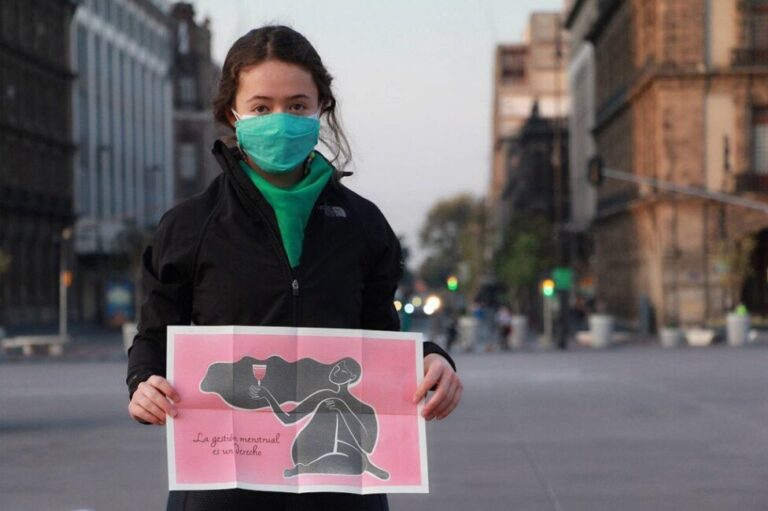
Campaigns that adult and young women have carried out in Mexico and Colombia demanding the right to menstrual health managed to get the authorities to eliminate the value added tax on essential feminine hygiene products. CREDIT: Nora Hinojo/UN Mexico

Universal problem, comprehensive approach

Is this a local, focalized problem? Not at all: “On any given day, more than 300 million women worldwide are menstruating.  In total, an estimated 500 million lack access to menstrual products and adequate facilities for menstrual hygiene management (MHM),” states a World Bankstudy.

“Today more than ever we need to bring visibility to the situation of women and girls who do not have access to and education about menstrual hygiene. Communication makes the difference,” said Hugo González, representative of the United Nations Population Fund (UNFPA) in Peru.

UNFPA says there is broad agreement on what girls and women need for good menstrual health, and argues that comprehensive approaches that combine education with infrastructure and with products and efforts to combat stigma are most successful in achieving good menstrual health and hygiene.

The essential elements are: safe, acceptable, and reliable supplies to manage menstruation; privacy for changing the materials; safe and private washing facilities; and information to make appropriate decisions.

UNFPA’s theme this year for international Menstrual Hygiene Day, which is celebrated every May 28, is “Making menstruation a normal fact of life by 2030”, the target date for compliance with the Sustainable Development Goals (SDGs) adopted by the international community at the United Nations.
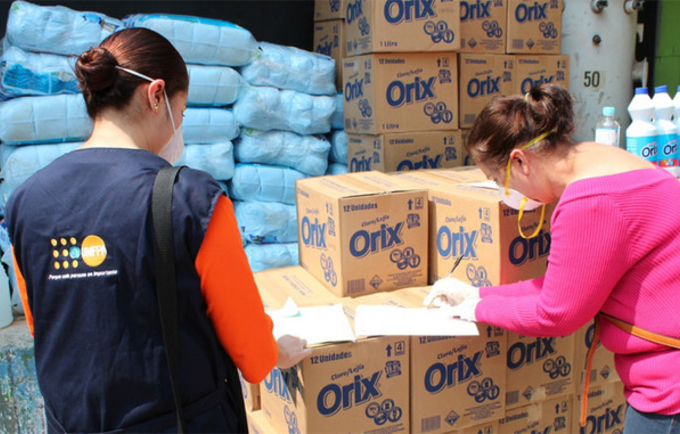
United Nations Population Fund workers prepare packages of menstrual hygiene items for women from poor communities in Central America. The cost of some of these products makes them unaffordable for many families. CREDIT: UNFPA

The pink tax

Nine out of 31 countries in the region consider menstrual hygiene products essential, which makes them exempt from value added tax or reduced VAT, according to the study “Sexist Taxes in Latin America” ??by Germany’s Friedrich Ebert Foundation.

After a “Tax-free Menstruation” campaign, in 2018 Colombia became the first country in the Americas to eliminate VAT – 16 percent – on menstrual hygiene products. Its neighbor Venezuela still charges 16 percent VAT, and Argentina, Chile, the Dominican Republic and Uruguay charge VAT between 18 and 22 percent on such products.

Colombia was joined by Ecuador, Guyana, Jamaica, Mexico – where street demonstrations were held against charging VAT on menstrual products – Suriname and Trinidad and Tobago. Other countries have reduced VAT, such as Costa Rica, Panama, Paraguay and Peru, while in Brazil VAT differs between states and averages 7 percent.

The so-called “pink tax” obviously affects the price of menstrual hygiene products such as disposable and reusable sanitary pads and menstrual cups, which becomes especially burdensome in countries with high inflation and depreciated currencies, such as Argentina and Venezuela.

According to the average price of the cheapest brands, ten disposable sanitary pads can cost just under a dollar in Mexico, 1.50 dollar in Argentina or Brazil, 1.60 dollar in Colombia, Peru or Venezuela, and almost two dollars in Costa Rica.

“It’s an important problem,” Saturno points out, “in a country like Venezuela, where the majority of the population lives in poverty and the minimum wage – although it has been increased with some stipends – is still just five dollars a month.”

Adult women, young women and girls participate in a session to share information and experiences organized by the Colombian association Menstruating Princesses, which emphasizes the importance of education to combat taboos and make menstruation a normal, stress-free experience. CREDIT: Menstruating Princesses

Hostile environment, scarce education

“If you often can’t buy sanitary pads, that’s the smallest problem. The worst thing is the shame you feel if you go to work and the cloth fails to keep your clothes free of blood, or if you catch an infection,” Nancy *, who at the age of 45 has been an informal sector worker in numerous occupations and trades in Caracas, told IPS.

The mother of four young people lives in Gramoven, a poor neighborhood in the northwest of the capital. Her two unmarried daughters, ages 18 and 22, have had experiences similar to Nancy’s on their way to school, in the neighborhood, on the bus, and on the subway.

“The thing is, the period is not seen as something natural, boys and men see it as something dirty, at work they sometimes do not understand that if you are in pain you have to stay at home,” said Nancy. “And when you work for yourself, you have to go out no matter what, because if you don’t go out, no money comes in.”

Saturno says that “poverty causes women and adolescent girls to miss days of secondary school or work because they do not have the supplies they need when they menstruate.”

“It becomes a vicious circle, because their academic or work performance is affected, hindering their chances of developing their full potential and earning a better income,” she adds.

But the problem “goes far beyond materials, it does not end just because someone obtains the products; it includes education and decent working conditions for women,” psychologist Carolina Ramírez, who runs the educational NGO Menstruating Princesses in the Colombian city of Medellín, tells IPS.

For this reason, “we do not use the term ‘menstrual poverty’ and speak instead of menstrual dignity, vindicating the need for society, schools, workplaces and States to promote education about menstruation and combat illiteracy in that area,” says Ramírez.

To illustrate, she mentions the widespread rejection of using tampons and cups “because of the old taboo that the vulva shouldn’t be touched, that the vagina shouldn’t be looked at,” in addition to the fact that many areas and communities in Latin American countries not only lack spaces or tools to sterilize products but often do not have clean water.

A concern raised by both Saturno and Ramírez is the great vulnerability of migrant women in the region – which has received a flood of six million people from Venezuela over the last 10 years, for example – in terms of menstrual and general health, as well as safety.

Another worrying issue is women in most Latin American prisons, which are unable to provide adequate menstrual hygiene, since they do not have access to disposable products or the possibility to sterilize reusable supplies.

Throughout the region, “greater efforts are required to break down taboos that violate fundamental rights to health, education, work, and freedom of movement, so that menstruation can be a stress-free human experience,” Ramírez says.

*Names have been changed to protect the privacy of the interviewees.

© Inter Press Service (2023) — All Rights ReservedOriginal source: Inter Press Service

Where next?

Related news

Browse related news topics:

Latest news

Read the latest news stories:

  • Menstrual Health and Hygiene Is Unaffordable for Poor Girls and Women in Latin America Friday, May 26, 2023
  • How Farmer Producer Organisations Benefit Small Scale Farmers in India Friday, May 26, 2023
  • UN Human Rights Office Remains Under-Funded & Under-Resourced Friday, May 26, 2023
  • UNESCO unveils new AI roadmap for classrooms Friday, May 26, 2023
  • Weather experts predict ‘near normal’ season, with 5 to 9 potential hurricanes Friday, May 26, 2023
  • Despite ‘slightly’ improved food security in Yemen, hunger stalks millions Friday, May 26, 2023
  • Ukraine: UN delivers aid to millions, as civilian suffering continues Friday, May 26, 2023
  • ‘Safe digital public square’ never more important, says Türk Friday, May 26, 2023
  • Stop tobacco farming, grow food instead, says WHO Friday, May 26, 2023
  • Cooperatives in Argentina Help Drive Expansion of Renewable Energy Friday, May 26, 2023

In-depth

Learn more about the related issues:

Share this

Bookmark or share this with others using some popular social bookmarking web sites:

Link to this page from your site/blog

<p><a href="https://www.globalissues.org/news/2023/05/26/33889">Menstrual Health and Hygiene Is Unaffordable for Poor Girls and Women in Latin America</a>, <cite>Inter Press Service</cite>, Friday, May 26, 2023 (posted by Global Issues)</p>

… to produce this:

Menstrual Health and Hygiene Is Unaffordable for Poor Girls and Women in Latin America, Inter Press Service, Friday, May 26, 2023 (posted by Global Issues)


Source link

Tags: AmericaGirlsGlobalHealthHygieneIssuesLatinMenstrualpoorUnaffordableWomen
Previous Post

Is This The Turning Point For Energy Markets?

Next Post

Debt Ceiling Crisis: How a Default Could Unfold

Related Posts

Ugandan police tear gas crowd at Bobi Wine campaign event | Government

Ugandan police tear gas crowd at Bobi Wine campaign event | Government

by Euro Times
December 22, 2025
0

NewsFeedFootage reveals safety forces dispersing crowds with tear fuel at rallies for Ugandan presidential candidate Robert Kyagulanyi, often known as...

Land Grab: Inside Israel’s Escalating Campaign for Control of the West Bank

Land Grab: Inside Israel’s Escalating Campaign for Control of the West Bank

by Michael D. Shear, Daniel Berehulak, Leanne Abraham and Fatima AbdulKarim
December 22, 2025
0

Source link

Terrifying moment Brit tourists scramble to safety as water fills sinking ferry after hitting rock & capsizing

Terrifying moment Brit tourists scramble to safety as water fills sinking ferry after hitting rock & capsizing

by Sayan Bose
December 22, 2025
0

TERRIFYING footage reveals a vacationer ferry filling with water sending Brits scrambling to security. The boat was filled with 120...

Trump’s expanded travel ban hits Africa the hardest but reactions are muted

Trump’s expanded travel ban hits Africa the hardest but reactions are muted

by ABC News
December 18, 2025
0

HARARE, Zimbabwe -- Africa has been the toughest hit by the Trump administration’s resolution so as to add 20 nations...

U.S. government admits negligence in January helicopter-plane collision near Washington

U.S. government admits negligence in January helicopter-plane collision near Washington

by Euro Times
December 18, 2025
0

Take heed to this textEstimated 2 minutesThe audio model of this text is generated by AI-based know-how. Mispronunciations can happen....

Russia and Iran to Enable North-South Corridor, Boost De-Dollarization

Russia and Iran to Enable North-South Corridor, Boost De-Dollarization

by Author
December 17, 2025
0

https://sputnikglobe.com/20251217/russia-and-iran-to-enable-north-south-corridor-boost-de-dollarization-1123316871.htmlRussia and Iran to Allow North-South Hall, Enhance De-DollarizationRussia and Iran to Allow North-South Hall, Enhance De-DollarizationSputnik WorldwideThe Rasht-Astara railway...

Next Post
Debt Ceiling Crisis: How a Default Could Unfold

Debt Ceiling Crisis: How a Default Could Unfold

China’s industrial profits tumble 18% in April as demand sputters

China's industrial profits tumble 18% in April as demand sputters

Ugandan police tear gas crowd at Bobi Wine campaign event | Government

Ugandan police tear gas crowd at Bobi Wine campaign event | Government

December 22, 2025
Vince Zampella, former CEO of Infinity Ward, the studio behind Call of Duty, died Sunday at 55 in a single-car crash in Southern California (NBC Los Angeles)

Vince Zampella, former CEO of Infinity Ward, the studio behind Call of Duty, died Sunday at 55 in a single-car crash in Southern California (NBC Los Angeles)

December 22, 2025
TUR: High Concentration, Weak Momentum, And Regional Risks Justify A ‘Hold’ Rating

TUR: High Concentration, Weak Momentum, And Regional Risks Justify A ‘Hold’ Rating

December 22, 2025
Land Grab: Inside Israel’s Escalating Campaign for Control of the West Bank

Land Grab: Inside Israel’s Escalating Campaign for Control of the West Bank

December 22, 2025
Asset manager Janus Henderson gets bought by Trian, General Catalyst for .4 billion

Asset manager Janus Henderson gets bought by Trian, General Catalyst for $7.4 billion

December 22, 2025
Xylem: A Secular Growth Within Water (XYL)

Xylem: A Secular Growth Within Water (XYL)

December 22, 2025
Euro Times

Get the latest news and follow the coverage of Business & Financial News, Stock Market Updates, Analysis, and more from the trusted sources.

CATEGORIES

  • Business
  • Cryptocurrency
  • Finance
  • Health
  • Investing
  • Markets
  • Politics
  • Stock Market
  • Technology
  • Uncategorized
  • World

LATEST UPDATES

Ugandan police tear gas crowd at Bobi Wine campaign event | Government

Vince Zampella, former CEO of Infinity Ward, the studio behind Call of Duty, died Sunday at 55 in a single-car crash in Southern California (NBC Los Angeles)

  • Disclaimer
  • Privacy Policy
  • DMCA
  • Cookie Privacy Policy
  • Terms and Conditions
  • Contact us

Copyright © 2022 - Euro Times.
Euro Times is not responsible for the content of external sites.

No Result
View All Result
  • Home
  • Finance
  • Business
  • World
  • Politics
  • Markets
  • Stock Market
  • Cryptocurrency
  • Investing
  • Health
  • Technology

Copyright © 2022 - Euro Times.
Euro Times is not responsible for the content of external sites.

Welcome Back!

Login to your account below

Forgotten Password?

Retrieve your password

Please enter your username or email address to reset your password.

Log In