Sunday, March 8, 2026
  • Login
Euro Times
No Result
View All Result
  • Home
  • Finance
  • Business
  • World
  • Politics
  • Markets
  • Stock Market
  • Cryptocurrency
  • Investing
  • Health
  • Technology
  • Home
  • Finance
  • Business
  • World
  • Politics
  • Markets
  • Stock Market
  • Cryptocurrency
  • Investing
  • Health
  • Technology
Euro Times
No Result
View All Result

Big emerging-market companies worry investors

by Euro Times
November 18, 2022
in Finance
Reading Time: 3 mins read
A A
0
Home Finance
Share on FacebookShare on Twitter


Since september, when a botched budget in Britain roiled markets enough to threaten giant pension funds, investors have been looking for other vulnerabilities that might cause markets to break. Emerging economies are a prime candidate. Historically, high American interest rates and a soaring dollar have triggered financial instability across the developing world. A few unlucky places, including Argentina and Sri Lanka, have stumbled into crisis this time round, but many emerging-market governments have deeper foreign-exchange reserves and less dollar-denominated debt than before, and thus look much sturdier than even a decade ago.

Big firms in these countries are a different story. Debt issued by large companies has risen relentlessly since the turn of the millennium—from just over 60% of emerging-market gdp in 2000 to more than 90% on the eve of the covid-19 pandemic—as firms took advantage of low interest rates. Borrowing then jumped a further ten percentage points in 2020 alone. Much of this money is owed to foreigners. Although governments in emerging economies began to borrow in their own currencies after blow-ups in the 1990s, corporate debt is still mostly denominated in foreign currencies, meaning local-currency depreciation leads to a deterioration in companies’ balance-sheets.

According to JPMorgan Chase, a bank, the default rate for emerging-market issuers of high-yield corporate debt has jumped to 11.4% this year, well above the 1.7% notched in 2019 and the long-term average of 3.7%. Higher rates and an expensive dollar are only partly to blame. Troubles have been concentrated in China, where property-market woes have kept default rates in the sector at double-digit levels for two consecutive years, as well as in Russia and Ukraine. Russian firms are expected to default on debt worth $28bn in 2023, equivalent to two-thirds of the remaining stock of debt. Nevertheless, markets have for the most part already priced in losses, reckons JPMorgan, so defaults are unlikely to spark a wider crisis.

It is problems elsewhere that look more troubling. Rising rates and slowing growth have taken a toll on property markets around the world, and this is now creating difficulties for firms outside China as well as within. A default, in late September, on short-term debt issued by the developer of Legoland Korea has thrown debt markets in South Korea into turmoil. Yields on short-term debt have shot up to the highest levels since the global financial crisis of 2007-09. In late October the government said it would buy around $35bn in corporate bonds in order to stabilise markets.

In recent weeks, property troubles have also popped up in other emerging Asian economies. Liquidity has evaporated from Vietnamese corporate-bond markets, following an effort by officials to rein in corruption in the country’s property market. As prices for developers’ shares and bonds tumble, the central bank is weighing intervention to keep the market functioning. Indonesian developers face similar difficulties. Prices for the bonds of several large firms have fallen to distressed levels, amid credit-rating downgrades and fears that default risks are growing.

This spreading financial unease may seem reminiscent of past panics, including the devastating crisis that ripped across Asian economies in 1997 and 1998. There are, though, good reasons to hope trouble will be contained. Rising rates have hurt property markets, but most big firms pay fixed coupons on their bonds and have not issued much new debt over the past year. Governments across Asia have fiscal room to support their economies and hefty piles of foreign-exchange reserves.

Yet both Britain’s budget fiasco and the sudden collapse of ftx, a cryptocurrency-trading platform, demonstrate how quickly financial vulnerabilities can crystallise into problems. A few wobbles among emerging-market bonds could prove a few too many for comfort. ■

For more expert analysis of the biggest stories in economics, finance and markets, sign up to Money Talks, our weekly subscriber-only newsletter.




Source link

Tags: BigcompaniesEmergingmarketInvestorsWorry
Previous Post

Schwazze Stock: Executing Well In Difficult Economic Conditions (OTCMKTS:SHWZ)

Next Post

The Shrinking Stablecoin Market Is Another Sign of Investors’ Exodus From Crypto

Related Posts

After Trump’s sovereignty threats, Canadians keep ‘elbows up’

After Trump’s sovereignty threats, Canadians keep ‘elbows up’

by Alex Harring
March 7, 2026
0

Canadians maintain an "Elbows Up" protest in opposition to U.S. tariffs and different insurance policies by U.S. President Donald Trump,...

Iran War: Brent Ends Week at Over  a Barrel, Doubts About Damage to Iran and Condition of Israel Rise, Trump Doubles Down on Failing Kinetic War and Desperate Messaging

Iran War: Brent Ends Week at Over $90 a Barrel, Doubts About Damage to Iran and Condition of Israel Rise, Trump Doubles Down on Failing Kinetic War and Desperate Messaging

by Yves Smith
March 7, 2026
0

In the present day’s Iran battle replace can be extra telegraphic than traditional. I don't usually put together unique posts...

The 3 Best Retail Stocks to Buy in March

The 3 Best Retail Stocks to Buy in March

by The Motley Fool
March 7, 2026
0

Key FactorsAmazon is seeing robust working leverage in its e-commerce enterprise and accelerating income progress at AWS.MercadoLibre is among the...

Circle Bastiat: How a Small Salon in 1950s NYC Helped Ignite the Modern Austrian Revival

Circle Bastiat: How a Small Salon in 1950s NYC Helped Ignite the Modern Austrian Revival

by Justin M. Ptak
March 8, 2026
0

Within the early Nineteen Fifties, a exceptional group of younger intellectuals fashioned what later turned referred to as the Circle Bastiat—an...

Absorbing a Fed rate pause

Absorbing a Fed rate pause

by Hal Bundrick, CFP®
March 8, 2026
0

Householders are seeing little change within the nationwide common for HELOC and residential fairness mortgage charges, because the Federal Reserve...

Most Britons want to leave a legacy, but less than half have drafted a will

Most Britons want to leave a legacy, but less than half have drafted a will

by Vicky Shaw
March 7, 2026
0

Signal as much as our free cash publication for funding evaluation and skilled recommendation that can assist you construct wealthSignal...

Next Post
The Shrinking Stablecoin Market Is Another Sign of Investors’ Exodus From Crypto

The Shrinking Stablecoin Market Is Another Sign of Investors’ Exodus From Crypto

Why America can’t seem to quit Saudi Arabia

Why America can’t seem to quit Saudi Arabia

Hungary refusing to return ‘war mafia’ cash to Ukraine (VIDEO) — RT World News

Hungary refusing to return ‘war mafia’ cash to Ukraine (VIDEO) — RT World News

March 8, 2026
Australian Grand Prix 2026 LIVE: TV Channels, Live Updates for F1 season opener

Australian Grand Prix 2026 LIVE: TV Channels, Live Updates for F1 season opener

March 8, 2026
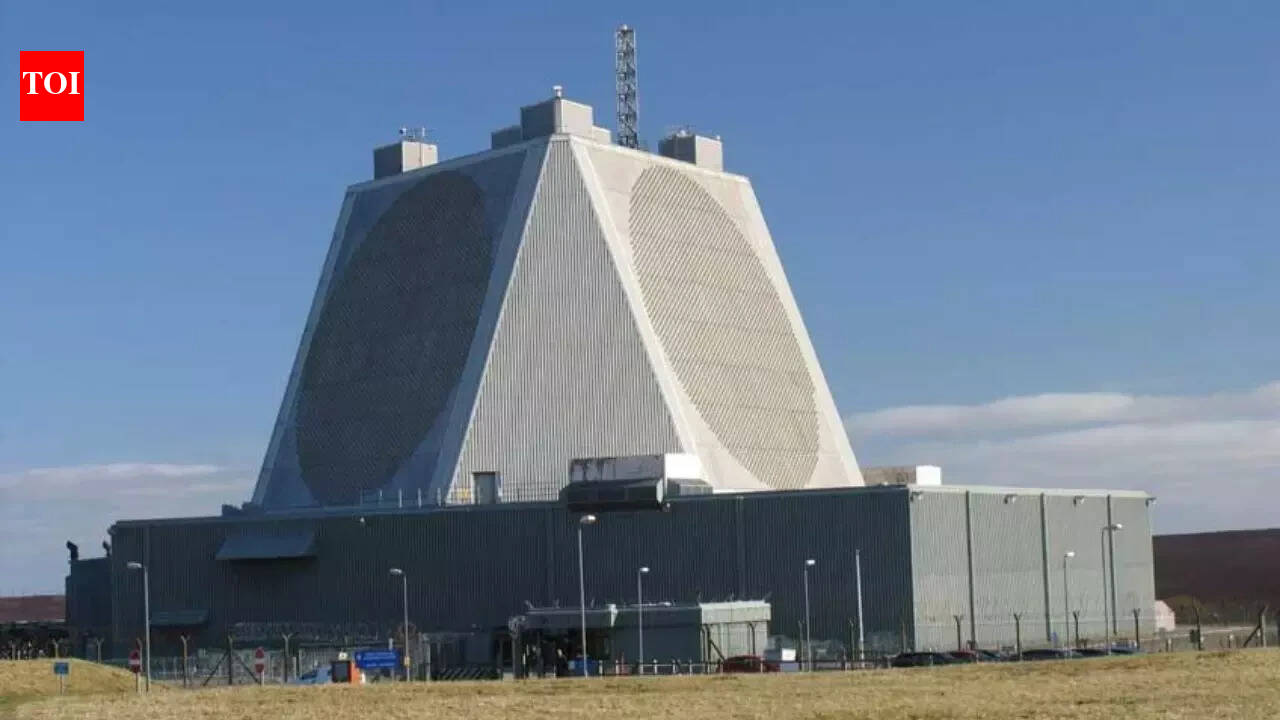
Middle East conflict: Iran ‘struck’ high-value US radar systems in Gulf, show satellite images

Middle East conflict: Iran ‘struck’ high-value US radar systems in Gulf, show satellite images

March 8, 2026
Six federal scientists run out by Trump talk about the work left undone

Six federal scientists run out by Trump talk about the work left undone

March 7, 2026
Phone-based system promises better avatar movement without expensive VR gear

Phone-based system promises better avatar movement without expensive VR gear

March 7, 2026
Dow Jones, S&P 500, Nasdaq, KOSPI, Nifty 50: How the indices fared during major wars and why it’s different this time

Dow Jones, S&P 500, Nasdaq, KOSPI, Nifty 50: How the indices fared during major wars and why it’s different this time

March 7, 2026
Euro Times

Get the latest news and follow the coverage of Business & Financial News, Stock Market Updates, Analysis, and more from the trusted sources.

CATEGORIES

  • Business
  • Cryptocurrency
  • Finance
  • Health
  • Investing
  • Markets
  • Politics
  • Stock Market
  • Technology
  • Uncategorized
  • World

LATEST UPDATES

Hungary refusing to return ‘war mafia’ cash to Ukraine (VIDEO) — RT World News

Australian Grand Prix 2026 LIVE: TV Channels, Live Updates for F1 season opener

  • Disclaimer
  • Privacy Policy
  • DMCA
  • Cookie Privacy Policy
  • Terms and Conditions
  • Contact us

Copyright © 2022 - Euro Times.
Euro Times is not responsible for the content of external sites.

No Result
View All Result
  • Home
  • Finance
  • Business
  • World
  • Politics
  • Markets
  • Stock Market
  • Cryptocurrency
  • Investing
  • Health
  • Technology

Copyright © 2022 - Euro Times.
Euro Times is not responsible for the content of external sites.

Welcome Back!

Login to your account below

Forgotten Password?

Retrieve your password

Please enter your username or email address to reset your password.

Log In